
Tom Saradis Interview on Medicare Made Simple Radio Show
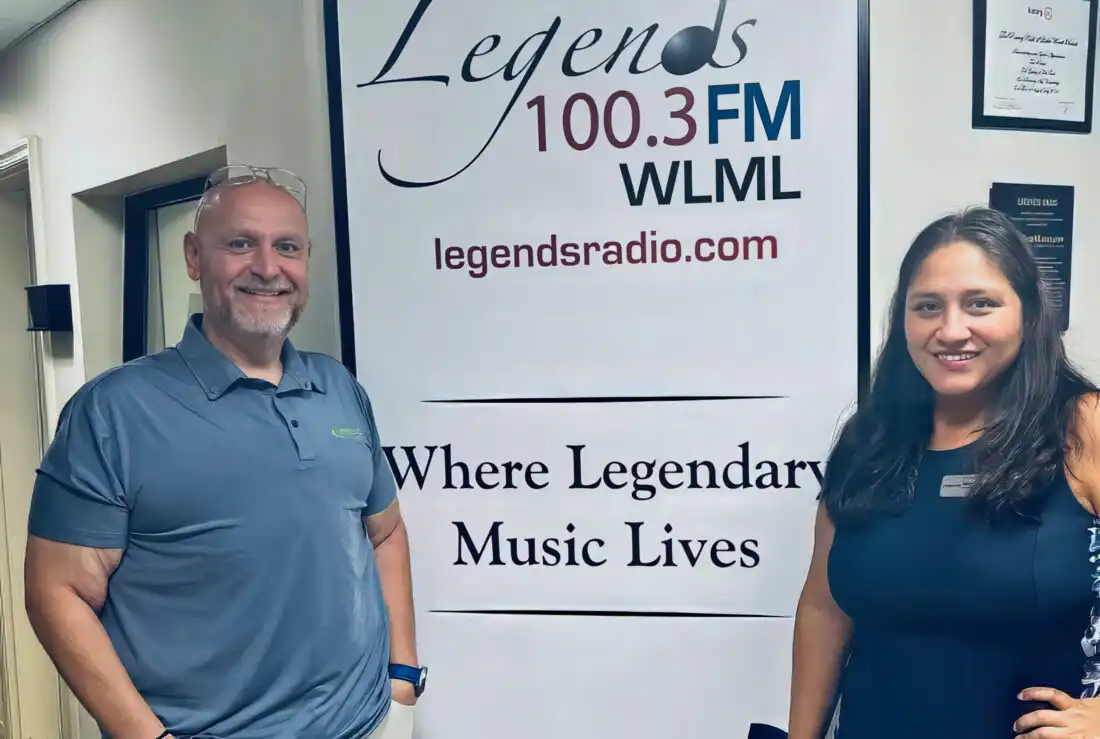
Medicare Made Simple Radio Interview with Tom Saradis, CEO of Insulinic of Florida and Miriam Leiva from United Insurance Experts.
Transcript
Miriam: Good morning, and thank you for tuning in. I’m Miriam Leiva with United Insurance Experts. We’re not affiliated with or endorsed by the government or the federal Medicare program. The purpose of the show is to educate you on Medicare and to connect you with different products and services that can help you. Tracy will not be with us today as she is busy filming her TV show. Make sure to check out her show that’s on Hulu and Roku. If you have any questions about that, please reach out to me, but not to worry. I have a great guest today, Tom Saradis. Tom Saradis is the CEO of Insulinic of Florida. In his role, he’s responsible for overall company direction as well as excellence in diabetes management clinic locations and medical partnerships. Since the inception of Insulinic of Florida in 2022, Tom’s strong leadership has made a tremendous impact, particularly with diabetic patients’ experiences. He’s an inspiring, determined leader with a passion for providing healthcare choices to help improve the quality of life for diabetics. Welcome, Tom.
Tom: Well, good morning. Thank you for having me, Miriam.
Miriam: It’s my pleasure. So tell us a little bit, Tom, about you.
Tom: So I’m originally Canadian, and I grew up in a socialized medical country where the government kind of dictates your healthcare and along my journey. So my story is a little different than everybody else’s. I got my education in healthcare from a personal experience of being north of 500 pounds. At the early age of 13 and 14, I had to drop out of school because I didn’t have a desk that accommodated me. It was those traditional desks that had diagonal arms. So it was just after Thanksgiving; Canadian Thanksgiving is usually the first Monday of October. So the Tuesday I went back to school, and I was not able to fit in my desk. So I packed my locker and went home. Throughout my life, I continued to gain weight, and then in my early thirties, I ballooned to 508 pounds; when I went to see a doctor, I needed surgical intervention because dieting and willpower are not going to help you lose 300 pounds.
So what ended up happening was I started to realize how convoluted the healthcare system in Canada was. Fast forward, I paid for my own private healthcare, and had my own surgery. As you can see, I’ve lost 300 pounds and maintained it off for the better part of almost two decades now. Fast forwarding, I started looking at different to help people and realized that an emerging chronic illness that is happening not only in the US and Canada, but the rest of the world, was diabetes. As I did my research and better understood what different treatment plans were for diabetes, I realized that there was one treatment plan that’s been around since the eighties that wasn’t available to the Florida market. So as I continued to dig and continue to investigate, I realized that insulin infusion is one of the better ways to treat, whether that’s type one, type two, type one and a half, and even pre-diabetes. With that opportunity and my business acumen, I packed my family up in early 2022, moved down here, and we’ve since launched two clinics that are operational, with four more that are in negotiation stages in the South Florida market, one in Hollywood and one in North Miami Beach.
Miriam: Wow. What’s the name … Insulinic of Florida? I love the name. It’s catchy. Yes, it is. So what are the services that Insulin of Florida provides? Exactly.
Tom: So our core with diabetes and especially type two or pre-diabetes, a lot of it is behavioral modification. A lot of it is lifestyle. So it’s not about coming in and seeing one of our doctors for five minutes. We use the insulin infusion that I mentioned as our core treatment for our patients. But it’s that coming in twice a week and having the time with the provider and the diabetic specialist and being able to answer your questions. It’s not coming in for five minutes, getting a prescription, and leaving. This is taking a functional approach to medicine, a holistic approach, looking at it and saying, what can we do to help you improve? But at the end of the day, if a patient is not engaged and does not want to make a difference, it doesn’t matter how far we move the mountain; if they don’t pick up the last boulder, we’re never going to get the clearing that we need for them to see a difference in their lives.
So at Insulinic of Florida, we start off by having you come in, we do a complete physical workup, and get a better understanding of what your concerns are. Diabetes is a complex disease. Neuropathy, kidney function concerns, and chronic fatigue. The worst one is people start to lose their vision and get brain fog. There are so many factors. It’s a multifaceted disease. So what ends up happening is we try to break that out and look at it as we’re here in partnership with you to start to make those changes, whether that’s a lifestyle change, whether that’s a change on the medication in collaboration with your primary care physician. Our patients have seen great successes. A1c levels lowered after three months, neuropathy starting to diminish, the chronic fatigue…When you’re getting up all night long to go to the washroom, and you’re not getting a good regular sleep pattern, what happens? You get up in the morning, you’re tired, you have a slower metabolism, and walking to your car can seem like a monumental task. So the food you eat is not being burnt, you’re not using it as energy, and it’s just a vicious cycle. The weight gain comes, and the diabetes is more out of control. You require more medications. We’re trying to put a stop to that, and from what we’ve seen, we’ve been successful in it with our patients.
Miriam: Now, do you also help them with their lifestyle? Do you have a nutritionist or any of that?
Tom: Yes. it’s a multifaceted program. So for the first couple of weeks of coming in, our belief is let’s gather as much information from the patient as we can. If you don’t like broccoli, and I’m telling you, you’ve got to eat broccoli three days a week, that’s a failed relationship. So it’s getting to know the patient, and for the first couple of weeks while you’re there, the constant dialogue between our nurses and the patients, we get to understand what changes we can make that the patient can live with, can adhere to, and can benefit from. So it is a multifaceted program. There is going to be some nutritional guidance. There is going to be some physical fitness guidance. It’s talking to the patient and seeing what’s best. Small changes make the biggest differences in the world. We’re asking somebody to give up one meal a week and start looking at things that they can benefit from and introduce things that we incorporate in their life, one meal at a time. Perfection is a state of mind. It’s not reality. Right. So if you think somebody is going to eat 21 perfect meals in a week, you’ve already failed.
Miriam: No, I get it. I’ve struggled with my weight my whole life. It’s definitely also mental. You have to prepare.
Tom: Very much so.
Miriam: Nowadays, to go to the store and get veggies, it’s just more…it’s definitely expensive to get the right foods.
Tom: Unfortunately, proteins and vegetables, which should be the basis of what we eat, are the most expensive things in the grocery store. Right. Processed foods and carbohydrates are inexpensive and typically easy to prepare, and when you’re in challenging financial times like we’re seeing right now with inflation rates, shelter is always going to win over quality food on the table. When the family has a limited budget, and they have to make sure that they keep shelter over the family’s head, you’re going to compromise on the groceries and the quality. Right. So it’s definitely a balancing act, and every time we see economic times that are challenging, we see diabetic rates that are on the rise. But the problem is, even when the times are good, and we’re not in an inflationary or a recessionary period, diabetic rates don’t go back down. Right. It’s…
Miriam: The bad eating habits that become a habit.
Tom: Correct, correct.
Miriam: Let’s just get this. This is what I’m used to eating. This is the easiest. Believe me, I’ve done it myself. But what is the difference between this treatment and current diabetes treatments?
Tom: Current diabetes treatments are more on the pharma side. Medications. Current diabetes treatments are very good at treating the sub-symptoms or masking, let’s say, the sub-symptoms. So you have pain from neuropathy, you’re provided pain medication for the pain to be more bearable so you can sleep better at night. We go to the core root of what’s causing all this, and that is insulin resistance and your body not being able to metabolize and metastasize the sugar we’re consuming properly.
So by doing our insulin infusion treatment, it’s reprogramming the pancreas. We give microdoses. Almost a better way for somebody to understand is that we’re giving you a pinhead of insulin over a two-hour period, and that’s to tease your pancreas to get it to start working. In that rhythmic approach, a healthy person’s pancreas will release insulin anywhere between that 4, 8, and 10-minute cycle and its rhythmatic. A sluggish pancreas isn’t spiking it, and it’s kind of just releasing it all the time. So you’re not getting the benefit of properly metabolizing the sugars that we’re eating. Right. So that’s different. We’re not giving you a prescription to mask your sub-symptoms. We’re going after the root cause, which is insulin resistance and that sluggish pancreas.
Miriam: Wow. Now, how long does it take for the results to show? Is this a long process?
Tom: That’s a good question. The longer somebody has been diabetic and their blood sugars have been out of control, the longer the results are going to take. We had one patient who came in two weeks ago with an A1c level of 11, which is extremely high. A nice average in a non-diabetic is in the mid-fives. So this gentleman was a type two diabetic, but he refused to take insulin as an injection. So he was trying to manage it himself, and unfortunately, it was too far past being able to self-control it. Only after two treatments we started seeing that we had the ability to lower his blood sugar, and that was because he had not built a resistance to insulin. So the longer, when you look at a diabetic’s life journey, they start off with typically orals, and they’ll take oral medications, and then the blood sugar is still out of control.
Then the doctor’s going to want to supplement the oral with an injectable with a slow-acting or a fast-acting insulin. And then what happens is the A1c and the blood sugars are still high, and then you continue to increase your dosage of injectables. So fast forward 10 years later, the patient is taking a lot of injectable insulin, and their quality of life is so more insulin, less quality of life. And then what ends up happening is the more pharmaceuticals, kidney function issues, liver function issues. So back to your question on how long everybody is different, we’ve seen results in as quick as a couple of weeks, and the results that are noticeable is they’re not complaining about constant pain of neuropathy when they’re going to bed at night, they’re saying they’re sleeping better. They don’t have to get up and go and go pee as frequently as needed prior to being a diabetic. So let’s say that somebody is willing to make some adjustments on their own as well as coming in and being a compliant patient at Insulinic of Florida; we’re going to say that we can start to see minor to significant results in that two to four week period.
Miriam: Wow. Yeah. Now, I want to make this clear. This is not replacing their current treatment. This is in addition to…
Tom: Correct. Correct. We start off by complimenting what their current physician has them on. We’re not here to strip them of any medications. What we do is, when a patient first comes in during our complimentary diabetic screen, we do a nerve conduction study, an ANS test, and that gives us our baseline, as well as drawing fresh labs so we can understand where they are. At the three-month mark. We will redo those tests, and once we see an improvement in several areas, we then forward that information to their primary care doctor. Or to their endocrinologist with recommendations from our internal medicine team on what medications that doctor should review and potentially either lessen the frequency, lessen the dosage, or completely remove them depending on how, depending on how dramatic the improvement was. We are not there to replace the care from their primary care team. We’re there to supplement, as you said, Miriam, and when a patient comes in and has got a scratchy throat, has a rash. We’re picking up the phone and calling their primary care doctor, saying, can you see Mrs. Smith next Tuesday? We’re not there to say, oh, we’ll do this, this, and this. Our key focus and our primary care model is about managing their diabetes, and there’s no shortage of that.
Miriam: Okay. Got it. Now, what should patients expect during the treatment?
Tom: It’s like going to a movie theater. We’ve built our infusion centers with recliners, massage chairs, and TVs. You come in, you sit down, we start an IV, we start the process, and then you’ve got an MA, or you’ve got a nurse practitioner that’s floating around the infusion area and having discussions with you. The biggest value we see from our patients is having discussions in that open forum with the diabetics around them, and they’re starting to see that a lot of people feel that they’re the only ones going through this, and they’re the only ones suffering from this, and they wish they could explain themselves better, but they don’t have the right words to get their doctor to understand. And when we hear the sharing of advice and listening to people dialogue, it is one of the biggest strengths that comes out of them being with us twice a week for a couple of hours to start. They start to develop infusion buddies, and they’ll say, well, is Mrs. Jones going to be here? I’d like to book…so it’s that comfort. It’s that repetition. So there are TVs are on, people are around, there’s always staff around to discuss things with them. Some of them want to be left, they want a little bit of quiet, they’re on their phone. So you get the best of both worlds. The centers are set up in a way that can provide you a certain amount of quiet if we seat you in a certain area, or if you want to be in the hustle and bustle and talking to the other patients and being part of that and having discussions and dialogue on what everybody’s seen that’s different. It’s a good mix, and it’s also as our patients that have been with us the longest come back and they become a positive reinforcement that it’s possible, it’s worked for me, it can work for you. This is what I’ve done to supplement what I’m doing here at Insulinic of Florida. So that’s what they can expect. You’re coming into an environment, and you’re sitting down, and our focus is to discuss and help you better manage your diabetes.
Miriam: Wonderful. Now, are these treatments covered by insurance?
Tom: Correct. They are covered by Medicare and Medicaid. We recently got our Aetna contract, Cigna, Blue Cross Blue Shield, its covered by all insurance plans.
Miriam: Now, I know you mentioned you currently have two locations. Are you planning on possibly expanding to….
Tom: We have four more that are currently in discussions. We’re looking at Delray, and we’re looking at Plantation or Weston. We’re looking at Fort Lauderdale, we’re looking at Pompano. Nothing that’s going to transpire by the end of the calendar year. By the time you find a suitable location and the building permits to build, our goal is to have another one or two up and running by the spring of 2024.
Miriam: Wow. That’s pretty quick.
Tom: It’s still seven months out,
Miriam: But you can start off in your Hollywood location, and then you can move to a closer location when it does open.
Tom: Correct. All your records are easily transferable through our electronic medical records software. So, you would start off by coming to the clinic that’s currently open and treating patients, and as one becomes available closer to your zip code, we would transfer the files, and the continuance of care would be the same at that location as they open.
Miriam: Wonderful. I know you mentioned it’s a free consultation. That first consultation is free. How long does that take?
Tom: Anywhere from 50 minutes to 45 minutes. So part of doing this diabetic screen in the beginning is we want to identify suitable patients. There are certain factors that preclude you from coming in, so not everybody is 100% a candidate for this, unfortunately. But part of that diabetic screen is to identify the correct candidates, and once we’ve identified that we might even do a nerve conduction study while you’re there and draw lab work in preparation for infusions that might start taking place in two weeks after that.
Miriam: Okay. Now, you did mention lab work. Can they do it right at your facility?
Tom: Yes, we draw labs. It’s as convenient as possible. We also don’t want patients leaving and then trying to follow up. We want to manage this from the inception to the completion for the patient. Everything is done in-house nerve conduction. The diagnostics are done. We don’t have to send you out for any of that.
Miriam: Oh, great. Now, Tom, how can our listeners reach out to you? What’s your number? Is there a website?
Tom: Sure, it’s https://insulinicfl.com, or call us toll-free at 833-940-6240. I’m happy to have discussions with anybody. I’ll provide them my direct office number as well, which is 954-372-1202.
Miriam: Wonderful. Well, Tom, thank you so much for being with us today.
 English
  Español